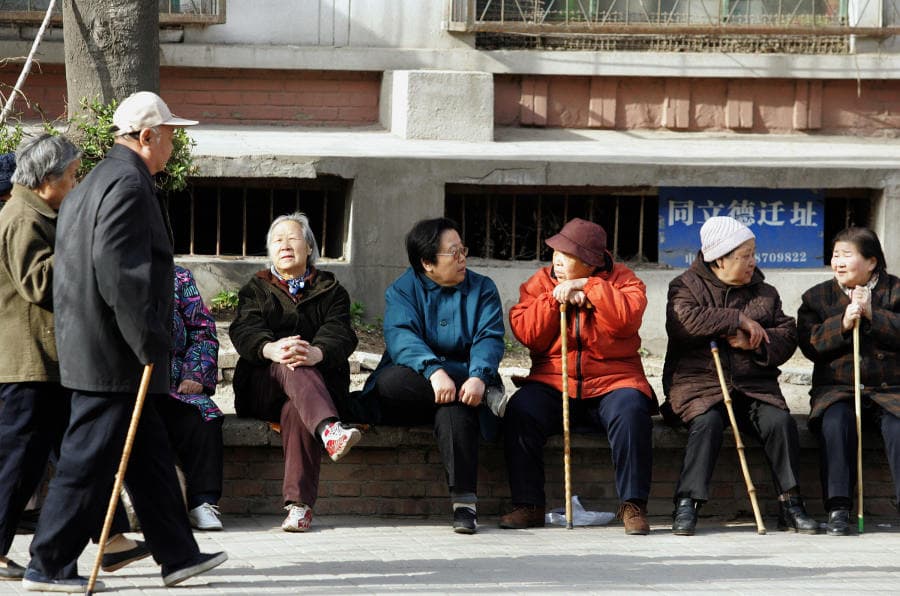
Chinese Netizens Slam State Media for Glorifying Elderly Labor: ‘A Toxic Message’
A recent report by Chinese state-affiliated media praising an 80-year-old woman for continuing to work has triggered intense backlash across Chinese social media, with critics accusing authorities of romanticizing economic hardship and normalizing the idea that elderly citizens must continue laboring well into old age.
The controversy began after Zhejiang-based state media outlet 潮新闻 (Tide News) published a story declaring that “80 years old is exactly the age to keep striving.”
The report focused on an 80-year-old woman in Pinghu, Zhejiang Province, who continues performing manual labor at a horticulture company. According to the report, the woman earns roughly 3,400 yuan per month in wages and receives additional pension income, bringing her total monthly income to around 7,000 yuan. That amounts to barely $1,000 per month.
80岁正是奋斗的年纪!浙江老人在园艺公司干活,工资加上养老金月入7000元,“在家闲不住 赚了给重孙用”网友热评:远离毒品🤣 pic.twitter.com/EmR3OkO9vn— 默默 (@momoGZ0412) May 22, 2026
80岁正是奋斗的年纪!浙江老人在园艺公司干活,工资加上养老金月入7000元,“在家闲不住 赚了给重孙用”网友热评:远离毒品🤣 pic.twitter.com/EmR3OkO9vn
In a video accompanying the report, the woman explained why she continues working despite her age. “I’m 80 years old,” she said. “I earn about 3,400 yuan a month, and with my pension it totals around 7,000. Work still has to be done. My great-grandson is eight years old now, and I’m earning money to help support his schooling and expenses.”
‘Glorifying suffering’
The story quickly spread online, but the response was far from the inspirational message authorities may have intended. Many Chinese internet users condemned the article’s framing, arguing that it exposed growing economic insecurity among elderly citizens rather than demonstrating resilience or virtue.
SIGN UP FOR OUR FREE NEWSLETTER
You are now signed up for our newsletter
Check your email to complete sign up
One widely circulated commentary published on NetEase under the account “Midnight Cry” criticized state media for transforming what had previously been an online joke into official propaganda. “Who would have imagined that the phrase ‘80 years old is the age to keep striving’ would someday become a state media headline?” the user wrote. NetEase is one of China’s largest media companies.
The commentary noted that Chinese media outlets had previously mocked Japan’s aging society and pension pressures by highlighting stories of elderly Japanese citizens forced to continue working in their 80s. Now, critics argue, similar conditions are emerging inside China itself.
According to the article, the elderly woman featured in the report reportedly wakes before dawn and rides a three-wheeled vehicle to work daily. Critics accused state media of portraying an extreme survival case as a model example for society.
Lack of pensions
The backlash also exposed deeper public frustration over China’s retirement system and economic pressures facing older generations. Commentators pointed out that many elderly people in rural China continue performing physically demanding labor well into advanced age, not out of personal fulfillment, but because limited pensions leave them financially vulnerable.
Some critics argued that glorifying elderly labor effectively normalizes the idea that retirement is becoming increasingly unattainable.
Netizens described the slogan as “a toxic motivational message jointly manufactured by capital, power, and the media.” “It is not simply telling the elderly to keep working,” the article stated. “It is telling everyone, especially young people, to accept a brutal new reality of working until death.”
Another commentary published under the NetEase account “Lost World Scholar” argued that the state media narrative ignored the broader reality facing ordinary workers. “In today’s China, people are already considered too old to find work at 45,” the article wrote. “At 60, many people cannot even get an interview opportunity.”
The author argued that the featured elderly worker represented an exceptional case rather than the norm. “Don’t focus the camera only on that one fortunate individual,” the commentary said. “Look at the unseen corners that remain ignored.”
Backlash spreads beyond China
The controversy rapidly expanded onto Chinese and overseas social media platforms, where many users openly criticized the government’s messaging.
Some accused authorities of promoting “suffering culture” rather than addressing structural economic problems. “Is it really something to be proud of that an 80-year-old still has to work?” one mainland Chinese user wrote. “Society should allow the elderly to retire in peace, not force them to continue laboring,” said another user.
On X, formerly Twitter, critics used even harsher language. “If you truly believe their slogan that ‘labor is glorious,’ then you’ll spend your entire life enduring endless hardship,” one user wrote.
Another commenter accused the government of steadily retreating from earlier promises surrounding retirement security. “They once told people the government would take care of them in old age,” the user wrote. “Now the message has become: even when you’re old, you still have to keep supporting the system.”
The backlash comes as China faces mounting demographic and economic challenges. The country’s rapidly aging population, slowing economic growth, youth unemployment pressures, and ongoing debate over delayed retirement policies have all intensified public anxiety about long-term financial security.
The controversy has also revived discussion around the rise of China’s “lying flat” movement, known in Chinese as tang ping. The phrase emerged in recent years as a form of quiet social resistance among younger Chinese frustrated by economic stagnation, grueling work culture, rising living costs, weak social mobility, and growing uncertainty about retirement security.
Rather than embracing the relentless pressure to “strive” endlessly, many participants in the movement advocate doing only the minimum necessary to survive by rejecting the idea that constant sacrifice and overwork will necessarily lead to a better future.
Analysts say the strong public reaction reflects growing unease over whether China’s social safety net can adequately support its elderly population in the years ahead. For many critics, the issue is not whether older citizens choose to work voluntarily, but whether economic conditions are increasingly making retirement itself a luxury rather than a guarantee.