Deep Beneath the Pacific, Japan Hunts for a New Source of Rare Earth Metals
Japan has begun exploring how best to mine deep-sea rare earth metals from the waters around its remote territory of Minamitorishima, after the Agency for Marine-Earth Science and Technology (JAMSTEC) successfully extracted mud rich in the critical materials during tests this February.
Rare earth metals, often shortened to rare earths, are crucial for producing high-tech goods, including computer chips and batteries.
While the discovery of this resource trove has come as a boon, given that China currently dominates the global market for rare earths, Japan faces distinct challenges in the effort. The rare earth metals around Minimatorishima are deposited miles below the ocean surface, making them difficult and costly to exploit. Furthermore, as with rare earth mining on land, there are a number of environmental concerns regarding the project.
Chinese dominance in rare earth mining pushes Tokyo to take on a steep technical challenge
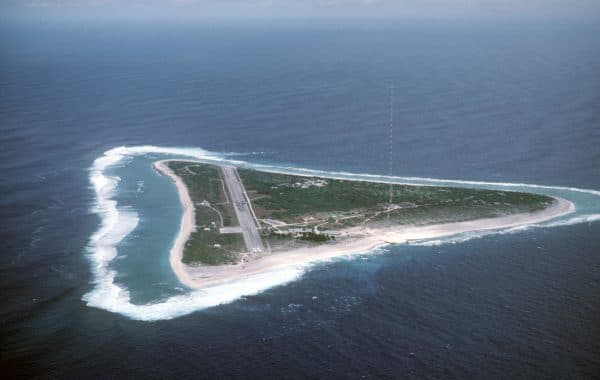
Minamitorishima, previously known as Marcus Island, is just 0.5 miles in area and lies in Japan’s special economic zone, 1950 km (about 1150 mile) southeast of Tokyo in the Pacific Ocean. The island, one of Japan’s few remaining overseas holdings after World War II, has no permanent civilian population and serves as a base for the Japanese Self-Defense Forces and the Japan Meteorological Agency.
The research team extracted the rare-earth-rich mud from a depth of 5,700 meters (around 18,700 ft) during their February experiment, as described in a May 13 feature by Nippon.com. They identified nearly 16 million tons of specialized oxides, as reported by the Times of India, and commercialization of the project is expected to start by 2028 at the earliest, according to Japan Times.
SIGN UP FOR OUR FREE NEWSLETTER
You are now signed up for our newsletter
Check your email to complete sign up
While China is the largest exporter of rare earths in the world, Japan is the largest importer.
Japan’s quest for self-reliance and partnerships in rare-earths accelerated after tensions rose in January when China imposed additional restrictions on dual-use items targeting 20 Japanese entities it alleged were linked to Japan’s military.
According to Chinese state media outlet Xinhua, affected companies included major firms such as Mitsubishi Heavy Industries Shipbuilding Co. and SUBARU Corporation. A spokesperson for China’s Ministry of Commerce described the measures as being intended to prevent Japan’s “remilitarization” and any pursuit of nuclear weapons capabilities.
This fresh wave of Chinese restrictions on Japanese entities in January happened exactly two months after Japanese Prime Minister Sanae Takaichi said that a mainland Chinese attack on Taiwan would imply an “existential threat” for Japan and as such warrant a military response by Tokyo.
The Center for Strategic and International Studies (CSIS) hosted a conversation titled “China’s Rare Earth Campaign against Japan,” between its analysts, Gracelin Baskaran and Meredith Schwartz, who said that Beijing’s move against Japan is “widely seen” as a response to Takaichi’s comments.
China’s restrictions on exports have significantly threatened to disrupt the industrial sector in Japan, straining supply chains, driving up costs, and creating production risks.
Japan already has a decade-old project dedicated to the domestic production of rare earths under its Cross-ministerial Strategic Innovation Promotion Program (SIP), headed by the Cabinet Office’s Council for Science, Technology, and Innovation. As described by Nippon.com, the discovery in the seabed off the coast of Minamitorishima island was carried out by a Japanese research team under this project.
The discovery happened in three phases, according to the report. The first phase happened between 2014 and 2018 targeting hydrothermal deposits at depths of up to 2,000 meters. The second phase took place between 2018 and 2022 focussing on developing technology to discover deep sea resources exceeding the depths of 2000 meters and the third phase began in 2023 and went to 6000 meters depth to discover rare earths. It was achieved by a robot collector and was linked to the drilling vessel Chikyū.
Concerns about economic feasibility linger
“The deposits contain high concentrations of at least six HREEs on which China has recently imposed export restrictions. Their value to Japanese industry can hardly be overstated,” said the report by Nippon. HREE stands for Heavy rare earth elements and these include–Dysprosium (Dy), Terbium (Tb), Yttrium (Y) (often grouped with HREEs), Holmium (Ho), Erbium (Er), Thulium (Tm), Ytterbium (Yb) and Lutetium (Lu).
Deep sea mining has been a controversial subject with 40 countries placing bans on its operations since 2022 but the International Seabed Authority is currently developing new regulations beyond national jurisdiction to cater to the needs of the signatories, according to a brief by Jane Nakano of the Center for Strategic and International Studies, published by East Asia Forum on May 5.
In this sector too, China has emerged as the country with the largest contracts and thus a stakeholder with substantial footprint in sub-sea resource governance, according to the expert.
“Japan’s trials may be within its exclusive economic zone, but their outcomes could help form effective international regulations and shape the geopolitics of sub-sea resource governance towards greater transparency and resilience to dominance by any single country,” Nakano wrote.
She expressed concerns about the economic feasibility of the project expected to cost US$2.1 billion to establish a domestic mining and supply chain.
“While the degree to which the deep-sea program could reduce Japan’s strategic vulnerability warrants close attention, it is only one piece of Japan’s mineral security puzzle,” Nakano added, emphasizing that domestic deep-sea rare earth supplies alone will not be able meet Japan’s industrial demand and it needs to pursue parallel measures like stockpiling, trade measures to prevent market manipulation and continued research and innovation.