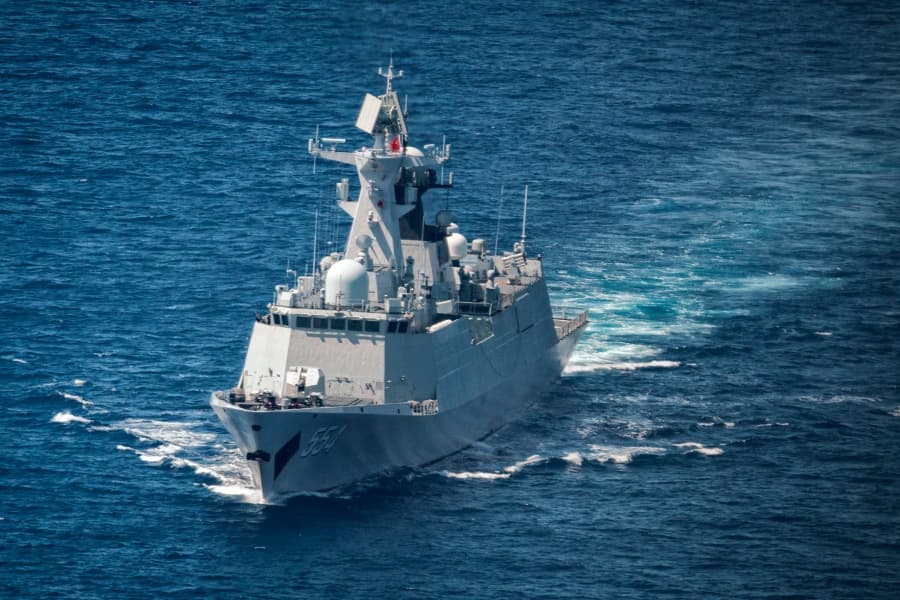
China and Philippines Summon Each Other’s Ambassadors After Violent Clash at Second Thomas Shoal
According to a July 21 Reuters report, diplomatic tensions between China and the Philippines escalated sharply after a clash between their personnel at Second Thomas Shoal in the South China Sea, known in the Philippines as Ayungin Shoal, prompted the two countries to summon each other’s ambassadors.
On the same day, the two countries took the highly unusual step of summoning each other’s ambassadors for emergency talks, signaling that the maritime dispute had rapidly expanded into a diplomatic confrontation at the highest level.
Reuters reported that Philippine President Ferdinand Marcos Jr. personally summoned Chinese Ambassador to the Philippines Jing Quan to Malacañang Palace in Manila at 5 p.m. on Tuesday. Several hours earlier, China’s Foreign Ministry had urgently summoned Philippine Ambassador to China Jaime FlorCruz in Beijing.
Amid frequent confrontations in the South China Sea, the Philippine president’s personal summoning of the Chinese ambassador, combined with the reciprocal summoning of ambassadors by both governments, carried considerable diplomatic weight.
Second Thomas Shoal clash: China and the Philippines accuse each other of ‘violent attacks’
The immediate trigger for the diplomatic crisis was a collision involving vessels near the BRP Sierra Madre at Second Thomas Shoal on Monday, July 20. However, China and the Philippines offered sharply conflicting accounts of what caused the confrontation and what occurred, according to Reuters.
SIGN UP FOR OUR FREE NEWSLETTER
You are now signed up for our newsletter
Check your email to complete sign up
The Philippine position: The Philippine military accused Chinese Coast Guard personnel of using inflatable boats to force their way toward Philippine resupply vessels. It said Chinese personnel brutally struck two Philippine Navy sailors in the head with wooden sticks, injuring them, and damaged a Philippine inflatable boat.
Philippine presidential spokesperson Claire Castro said President Marcos strongly condemned such dangerous, aggressive, and violent conduct. She said the decision to summon the ambassador involved matters of “national security.”
The Chinese position: The China Coast Guard and Foreign Ministry rejected the Philippine account, alleging that two inflatable boats deployed from the Philippines’ illegally grounded warship deliberately rammed a Chinese patrol vessel in a dangerous manner and initiated a “malicious attack” using paddles and long poles.
China maintained that its coast guard was conducting routine maritime rights-protection and law-enforcement operations in accordance with the law. It also said it allowed the Philippines to transport injured personnel by small boat only on the basis of “humanitarian considerations.”
According to a subsequent report by ABS-CBN News, the Philippine military rejected China’s claims of humanitarian assistance, calling them “false and misleading.” It emphasized that Philippine personnel acted professionally during the confrontation and did not initiate the conflict.
🇨🇳⚡🇵🇭China-Philippines clash at Second Thomas Shoal sticks and paddles usedA Filipino sailor was injured after Chinese and Philippine forces fought with wooden batons, oars, and long sticks .Both sides blame each other. The clash came as ASEAN foreign ministers met in… pic.twitter.com/v236o3FVyI— Global Brief (@globalbrief_now) July 22, 2026
🇨🇳⚡🇵🇭China-Philippines clash at Second Thomas Shoal sticks and paddles usedA Filipino sailor was injured after Chinese and Philippine forces fought with wooden batons, oars, and long sticks .Both sides blame each other. The clash came as ASEAN foreign ministers met in… pic.twitter.com/v236o3FVyI
Dispute over the 2024 provisional agreement
In addition to disagreeing over the details of the confrontation, the two sides also clashed over a provisional arrangement reached in 2024 concerning resupply missions to the shoal.
According to the Philippine Daily Inquirer, Chinese Ambassador Jing Quan told the media after the meeting that the confrontation occurred because the China Coast Guard discovered Philippine Navy personnel carrying out “reinforcement and construction work” on the grounded warship.
He said this violated the provisional agreement reached by China and the Philippines in July 2024 concerning rotation and resupply missions to Second Thomas Shoal. Jing insisted that Chinese vessels were dispatched to intercept and inspect the Philippine boats only after China discovered what it described as unauthorized reinforcement work in violation of the agreement.
However, according to The Philippine Star, the Philippine Department of Foreign Affairs has repeatedly stated that the 2024 provisional understanding does not restrict the Philippines’ lawful right to maintain its territory or protect the safety of its personnel stationed there. It has also said the agreement contains no provisions weakening the Philippines’ sovereignty claims in the West Philippine Sea.
ASEAN summit opens under a cloud as United States and Australia condemn China’s actions
The diplomatic confrontation erupted as the 59th Association of Southeast Asian Nations Foreign Ministers’ Meeting opened in Manila on Tuesday, inevitably placing South China Sea security at the center of regional discussions.
U.S. Secretary of State Marco Rubio and Chinese Foreign Minister Wang Yi were both expected to attend the meeting.
Reuters reported that the United States and Australia quickly issued public condemnations of the China Coast Guard’s conduct during Monday’s confrontation.
The U.S. State Department issued a statement criticizing China’s pattern of “dangerous and aggressive” provocations against lawful Philippine operations in the South China Sea, saying such actions undermined regional peace and stability.
Rubio, who had just arrived in Manila, also published an opinion article in a major local newspaper reaffirming “America’s unwavering commitment to freedom of navigation in Southeast Asia.”
He implicitly warned that if the region’s waters fell under the control of a major power willing to use commerce as a geopolitical weapon, Southeast Asia’s security and economic prospects would face serious threats.
Australian Foreign Minister Penny Wong also condemned China’s actions while in Manila, describing them as “destabilizing and dangerous.”
As the violent confrontation between Chinese and Philippine vessels at Second Thomas Shoal spreads directly from the sea to the highest levels of diplomacy, managing the crisis and preventing the dispute from escalating into a broader regional conflict will severely test the diplomatic judgment of all parties.
The confrontation could also push the long-delayed negotiations over a South China Sea code of conduct into an even deeper stalemate.