Japan Watched Trump-Xi Summit on Taiwan and Arms Sales
According to Reuters, the Trump–Xi Beijing summit of May 14–15, 2026 drew the expected cast of American business titans. Trump arrived with Elon Musk and Nvidia chief Jensen Huang in his delegation, signaling that trade and technology investment were central to the trip. U.S. officials had already indicated, before Air Force One left American airspace, that Taiwan and Iran would also feature in the talks. For Japan, those two words were sufficient to activate every lever of diplomatic influence Tokyo could bring to bear.
Bessent’s pre-summit Tokyo visit kept Japan inside the tent
Japan’s engagement with the summit began before Trump ever landed in Beijing. U.S. Treasury Secretary Scott Bessent visited Tokyo on May 11–13, meeting separately with Prime Minister Sanae Takaichi, Finance Minister Satsuki Katayama, and Economy Minister Ryosei Akazawa, The Japan Times reported.
The visit carried some friction. Bessent had previously criticized Japan’s large-scale currency market interventions to prop up the yen, and reports surfaced after his meeting with Katayama that he had pressed Tokyo to accept higher interest rates. Katayama declined to discuss details at his post-meeting press conference, citing the sensitivity of communications between the finance ministry and the Bank of Japan.
On the strategic questions, however, the tenor was entirely different. Bessent and Takaichi emphasized the shared challenge posed by China’s economic coercive behavior, the importance of U.S.–Japan supply chain cooperation, and the unshakeable foundation of the alliance. Japanese media read the visit as Tokyo using Bessent as a channel to transmit a political signal to Washington: do not concede too much to Beijing, and hold the line on Taiwan and Indo-Pacific security. The pre-summit exchange also gave Washington a way to share its agenda and likely positions with Tokyo before the fact, forestalling the suspicion and resentment that arrive when an ally learns what happened from a press release.
Takaichi called Trump on Air Force One and got a personal debrief
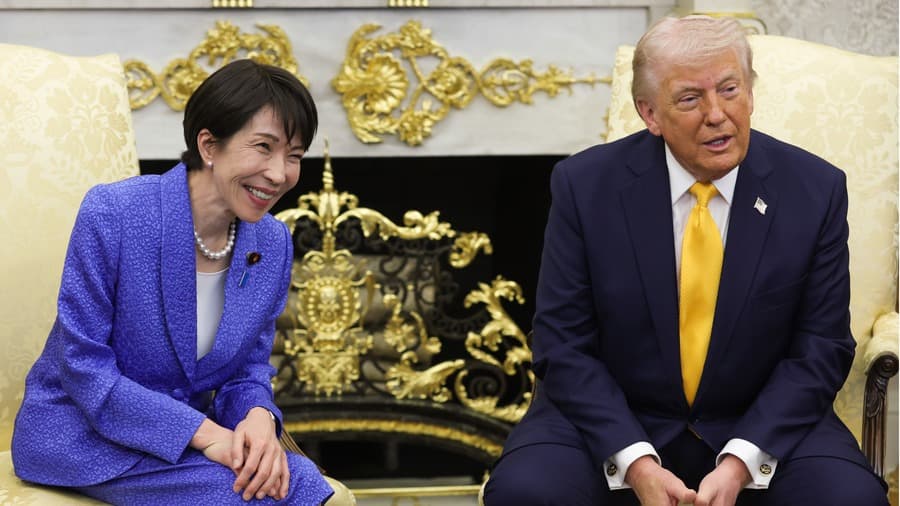
Takaichi had been pressing for a direct conversation with Trump even as the summit was still under way. Trump, returning to Washington, took her call from Air Force One. Takaichi subsequently disclosed that the call ran 15 minutes and covered the substance of the Trump–Xi talks, going beyond matters directly affecting Japan, NHK World Japan reported.
SIGN UP FOR OUR FREE NEWSLETTER
You are now signed up for our newsletter
Check your email to complete sign up
She was constrained in what she could say publicly: Trump had asked that the conversation remain confidential. Takaichi said Trump had expressed deep appreciation for Japan’s support, and that the two had agreed to maintain close communication on Indo-Pacific developments and to reaffirm what she described as the “rock-solid, unchanging Japan–U.S. alliance.”
The speed and directness of the exchange carried its own message. When Henry Kissinger secretly flew to Beijing in July 1971 and normalized the U.S. relationship with the People’s Republic of China without informing Tokyo until after the fact, the episode traumatized an entire generation of Japanese diplomats. The term coined for that shock, rendered loosely in English as “over-the-top diplomacy,” became shorthand in Tokyo for the nightmare of a Washington pivot that leaves Japan stranded. The Takaichi–Trump phone call was, among other things, a demonstration that 2026 is not 1971: Japan was informed by the principal himself, in real time, with the engines still running.
Japan’s two red lines: chip export controls and the Taiwan defense commitment
Two issues dominated Takaichi’s agenda throughout the summit period.
Semiconductor technology was the first. According to the Institute of Geoeconomics, Japan had previously curtailed exports of advanced semiconductor manufacturing equipment to China in coordination with U.S. export control policy. Takaichi needed to know whether any part of that architecture was being dismantled in exchange for concessions at the summit. The answer, as it emerged from official U.S. statements after the meeting, was essentially no: the only movement concerned Nvidia’s lower-end chips, where Beijing had already received export licenses, and Washington pressed China to stop administratively obstructing purchases by Chinese companies of those already-approved products.
Taiwan was the more sensitive concern. Takaichi had gone further than most Japanese political figures in publicly framing a Taiwan contingency as directly threatening Japan’s survival. Her “Taiwan contingency” doctrine, which holds that a conflict in the Taiwan Strait would constitute an existential crisis for Japan, has defined much of her government’s defense posture. If Trump had signaled at the summit that the U.S. might step back from its commitment to defend Taiwan, or had explicitly acknowledged Beijing’s claims over the island, Takaichi’s government would have been left badly overextended, having staked its defense posture on a framework Washington had quietly abandoned.
When Xi reportedly pressed Trump on whether the U.S. would intervene militarily to defend Taiwan, Trump declined to answer, telling reporters afterward that he does not discuss that question. Post-summit briefings confirmed that Xi had drawn red lines on Taiwan, warning that the issue could trigger conflict, and had pressed for an explicit American commitment to stay out. He did not get one. A Japanese Foreign Ministry official who commented on the result on condition of anonymity said the outcome was “not surprising,” while confirming that Taiwan had been the Japanese government’s foremost concern throughout the summit.
Arms sales to Taiwan entered summit politics for the first time
Arms sales to Taiwan have historically been governed by the “Six Assurances” that Washington extended to Taipei in 1982, among which is a U.S. commitment to make arms sale decisions independently of Chinese pressure. During the Beijing summit, however, a pending $14 billion U.S. arms sale to Taiwan was raised in discussions with Xi. Trump stated afterward that he had not yet decided whether to proceed, saying “I may do it. I may not do it,” while pointedly declining to confirm the sale would go forward. The fact that the sale had become a summit agenda item at all introduced a layer of uncertainty that was not previously there.
Japan has simultaneously been moving to fill exactly this kind of gap. In April 2026, the Japanese cabinet and the National Security Council approved revisions to Japan’s Three Principles on Transfer of Defense Equipment and their implementation guidelines. The revisions eliminated the previous restriction limiting defense exports to five non-lethal categories: search and rescue, transport, surveillance, minesweeping, and warning. Under the revised framework, Japan can now export weapons as defined under its Self-Defense Forces Law, including missiles, warships, and combat aircraft.
If U.S. arms transfers to Taiwan become subject to political negotiation with Beijing, Japan’s newly unlocked weapons export capacity could serve as a supplementary supply channel, offering Taiwan a source of advanced military equipment that would have been unthinkable just years ago. If the $14 billion sale stalls or is withdrawn under Chinese pressure, it will be the first concrete instance of summit politics directly affecting Taiwan’s defense procurement, and Tokyo will then face a decision about how far to take its new weapons export flexibility. Tokyo has the legal authority to arm Taiwan with missiles, warships, and combat aircraft. It has never done so. Whether that changes depends on what Washington asks, and what Beijing does next with the $14 billion sale.
By Gong Xiangsheng, Vision Times